Devanathan-Stachurski Hydrogen Permeation Cell Kit

This hydrogen permeation cell, also known as a Devanathan-Stachurski cell, is used to study corrosion via permeation of hydrogen through a thin disk of metal (typically steel). A complete setup includes two cells, several electrodes/accessories, as well as two fully-floating potentiostats (all sold separately). This setup is designed to meet standards from procedure ASTM G148.

Product Information

Important Product Warnings and Notices

Performing a Hydrogen Permeation Experiment
A full hydrogen permeation experiment requires at least two Devanathan-Stachurski cells, several electrodes/accessories (see pricing table below for details), as well as two potentiostats. Contact Pine Research for more details regarding implementation and operation of a hydrogen permeation experiment.

Additional Product Details

Hydrogen permeation experiments often follow the ASTM G148 standard. This Devanathan-Stachurski cell from Pine Research is designed to meet the specifications in ASTM G148. Each borosilicate glass cell holds around 250 mL of electrolyte, has four 14/20 taper ports, and has a #25 spherical joint. A thin metal disk is sandwiched between the spherical joints of two cells, and sealed with O-rings on either side pressed together with a pinch clamp. Pine Research offers 304 stainless steel disks that are 2.13″ (5.40 cm) OD, 0.060″ (0.15 cm) thick; other materials may be available upon request.

The exposed surface area on either side of the disk is approximately 6.95 cm2. Per ASTM G148, the required electrolyte volume per cell should be > 20 mL/cm2, and the recommended ratio of metal disk radius to thickness should be 10:1 or greater. Therefore, using the standard 304 stainless steel disks manufactured by Pine Research with these cells, the ASTM G148 specifications can be satisfied. A minimum volume of 139 mL is required for a surface area of 6.95 cm2 (the cells each hold 250 mL), and the radius to thickness ratio (radius = 1.5 cm; thickness = 0.15 cm) is 10:1.

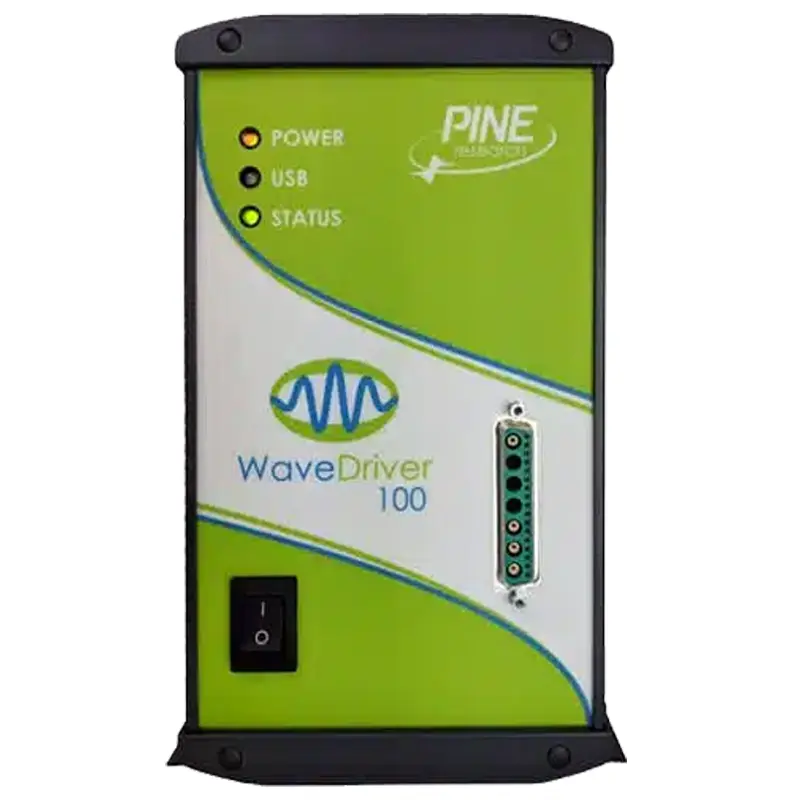
Operating a hydrogen permeation experiment requires two potentiostats. The typical experimental procedure requires a metal disk acting like the membrane in between the two Devanathan-Stachurski cells, and each half cell also contains a counter electrode and reference electrode (as well as optional Luggin tubes for each reference). Each potentiostat must be fully floating (that is, completely electrically isolated, especially with respect to Earth Ground), and both potentiostats’ Working Drive and Working Sense leads are connected to the metal disk. Each instrument connects to its own counter and reference electrode. One potentiostat generates H2 gas at its counter electrode, which diffuses throughout the electrolyte and permeates through the metal disk. Any H2 that passes through the disk to the other half cell can be detected via oxidation on the opposing counter electrode.

Product Specifications

The specifications of this product, and any other product that may be included in a kit or bundle, or a part that is included with this product, are listed below.
Devanathan-Stachurski Hydrogen Permeation Cell Kit

Product Kits

Product kit
Yes
Cell kit type
Complete (cell, accessories, electrodes)
Kit includes
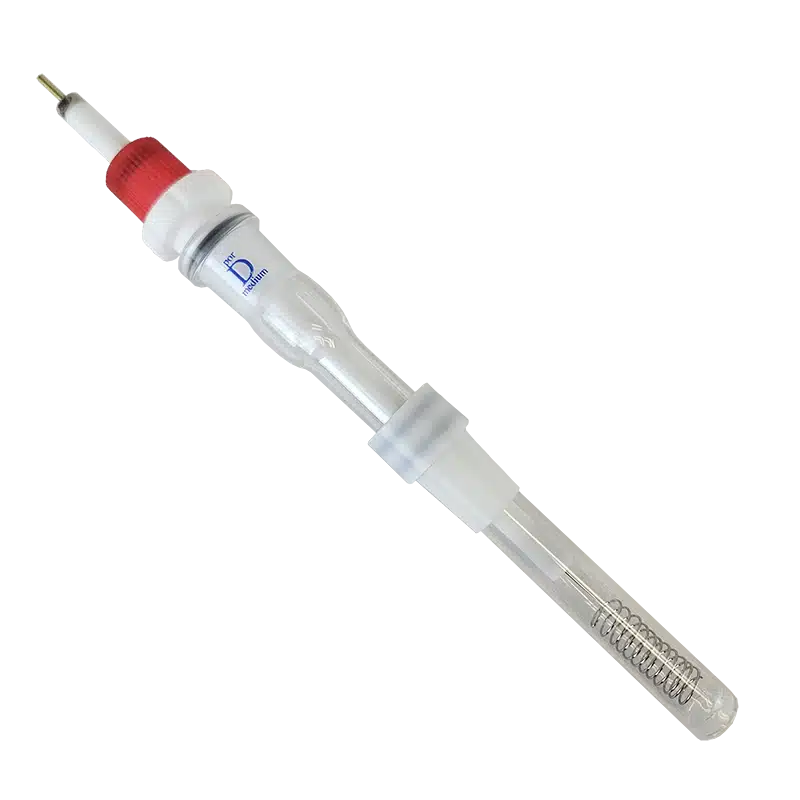
Working electrode, Reference electrode, Counter electrode, Electrochemical cell, Gas sparge/purge tube(s), Cell stoppers, O-rings, Cell clamp
Counter Electrode Assembly, Platinum (Pt), 14/20 View Product

Counter Electrodes

Counter electrode size type
Standard (9.5 mm - 12 mm OD)
Counter body diameter
6.5 ± 0.5 mm (shroud)
Counter length
180 mm
Counter electrode material
Platinum Wire
Counter electrode connection style
1.5 mm OD x 7 mm long gold-plated pin
Counter electrode wire diameter
0.5 mm
Counter electrode wire surface area
4.7 cm²
Counter electrode platinum mass
1.3 g
Counter electrode adapter
6.4 mm to 14/20 Joint, 12 mm to 14/20 Joint
Counter electrode isolation tube frit
Ace Glass Frit D (10 – 20 µm)
Counter electrode isolation tube diameter
12 mm
Counter shroud material
Epoxy
Reference Electrode, Silver/Silver Chloride, Single Junction View Product
Reference size type
Standard (9.5 mm OD)
Reference electrode body diameter
9.5 mm
Reference electrode length
19 cm
Reference frit material
Ceramic
External fill solution
4 M KCl with AgCl
Refillable
yes
Typical variance
±3 - 5 mV
Typical input impedance
< 10 kΩ
Reference electrode connection style
1.6 mm OD x 8.5 mm long brass pin
Reference electrode body material
borosilicate glass

Electrochemical Properties

Reference chemistry
Ag/AgCl
Standard potential
+199 mV vs NHE
Devanathan-Stachurski Hydrogen Permeation Half Cell (One Half Cell Only) View Product

Electrochemical Cell

14/20 ports
4
Cell material
Borosilicate glass
Cell volume (overall, max)
250 mL
Cell water jacket
No
Cell diameter
7 cm
Cell height
10.5 cm
Cell application
Stationary, Corrosion
Cell series
Standard Volume, Hydrogen Permeation
Cell compatibility
Standard volume cell series
O-Ring, Viton, Round, Size #217 View Product

O-Ring Dimensions

O-ring dash number
217
O-ring material
Viton®
O-ring cross section shape
Round
O-ring outer diamter (OD)
1 7/16 in
O-ring inner diamter (ID)
1 3/16 in
O-ring width (W)
1/8 in

Optional Product Add-Ons

Customers may wish to order optional add-on products and accessories compatible with this product. Should you want more details or wish to order an additional item, refer to the list below.

Safety Data Sheets (SDS)

If this product contains products where an SDS sheet is available, it will be displayed below.

Reference Electrode Filling Solutions

4 M Potassium Chloride with Silver Chloride (KCl with AgCl)

Request a Quote for this Cart

Below is the billing data we have on file. These details will be used on your quotation, so please update them here if you require any changes. Changing any details here updates them for your account.