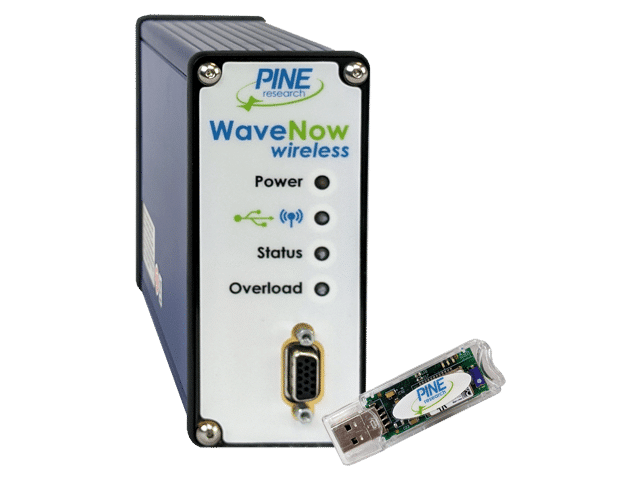
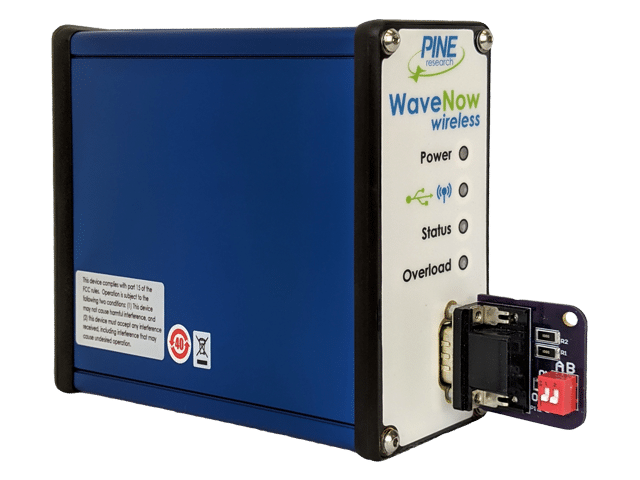
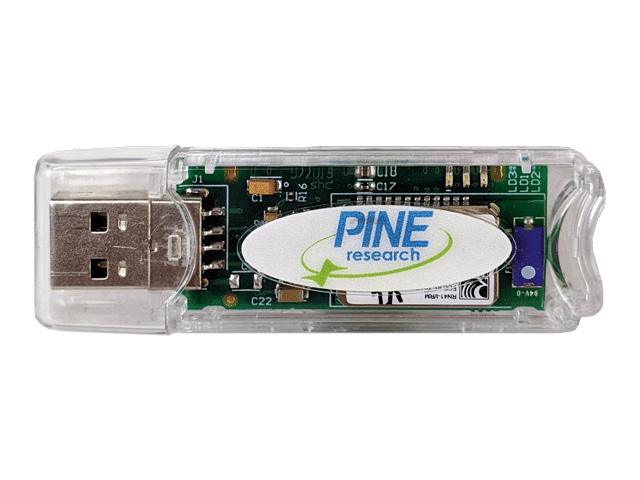
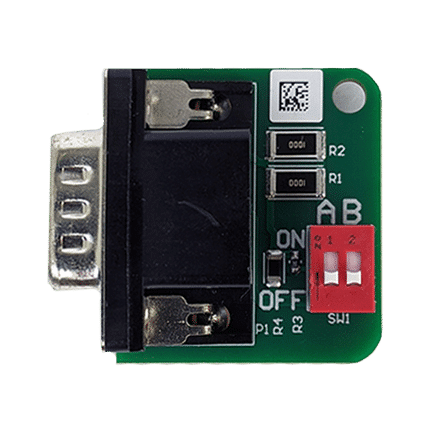
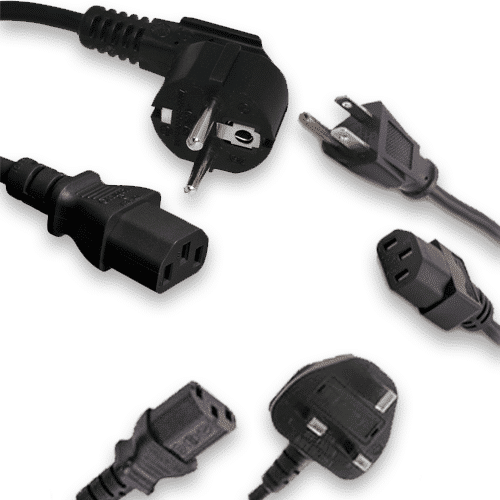
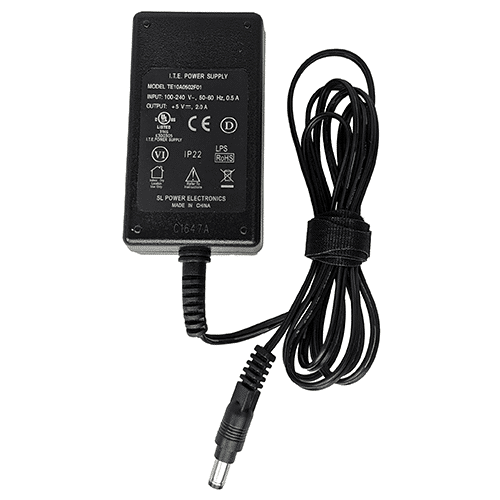
This new addition to our WaveNow® electrochemical workstation series lets you enjoy the freedom of controlling your electrochemical experiments wirelessly! The WaveNow Wireless electrochemical workstation is a potentiostat/galvanostat that gives you portability and access to remote lab spaces without creating a cabling problem. This is the perfect system for use in a glovebox – simply put the entire instrument into the glovebox along with your electrochemical cell and conduct your air-sensitive voltammetry experiments from any nearby computer. Under the control of our powerful AfterMath® Blue software package, the WaveNow Wireless is capable of performing a wide variety of popular DC electroanalytical techniques. Start enjoying the benefits of wireless control today!
Tip: scroll horizontally inside the table if needed.
WaveNow Wireless Electrochemical Workstation
The WaveNow® Wireless Electrochemical Workstation is engineered to provide the essential hardware and software features you need at an affordable price. It supports a wide range of DC electroanalytical techniques. It offers current ranges up to ±150 mA, potential ranges up to ±8 V, wireless communication, waveform filters, and iR compensation. The WaveNow Wireless is a capable yet cost-effective workstation, which is ideal for use with stationary electrodes, RDE, and RCE. Due to its wireless capability, it is especially useful for glovebox-based electrochemistry, or other conditions where having a cable between computer and workstation is inconvenient.
AfterMath Blue – Data Acquisition, Analysis, and Organization Software
Licenses for our AfterMath® Blue software are included with the purchase of an Electrochemical Workstation. The licenses give you access to all of the DC methods that the WaveNow Wireless can perform. Pine Research does not charge extra for various categories of electrochemical techniques. If the instrument is capable of a method, you have access to it (no hidden costs). Here are some unique features of AfterMath Blue:
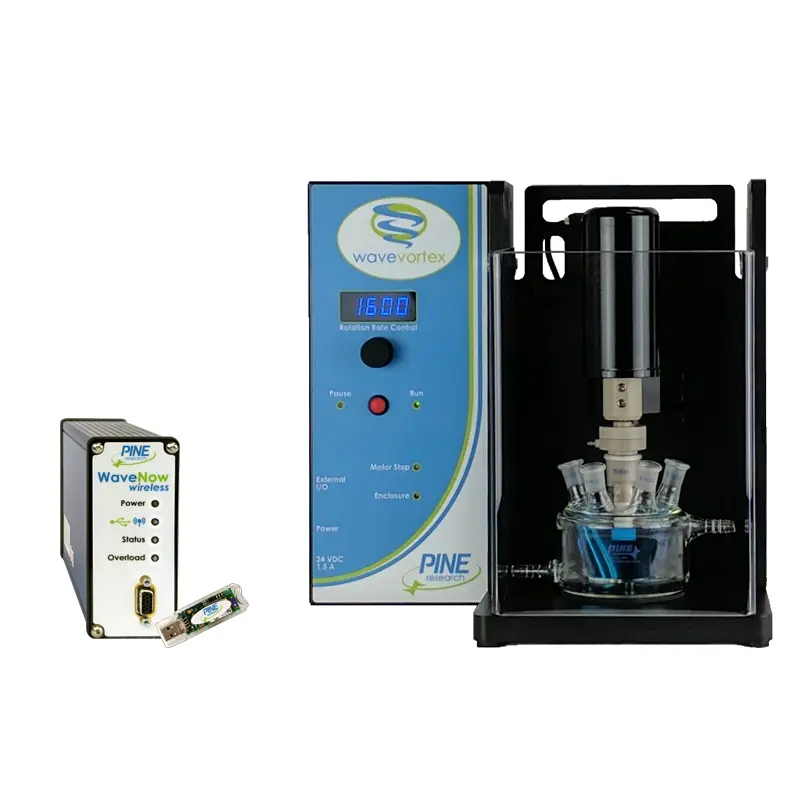
- Instrument Control. When started, AfterMath automatically detects all compatible instrumentation attached to the computer and provides complete control over each instrument. It can simultaneously control multiple instruments and queue multiple experiments.
- Flexible Plotting. AfterMath offers a powerful “drag-n-drop” feature for quickly copying and moving traces between plots, with precise control over various plot settings.
- Scientific Units. Designed with scientific data in mind, AfterMath properly handles units, metric prefixes, and significant figures.
- Data Archiving. A unique XML-based file format allows multiple related experiments to be stored in a single archive file, simplifying file management.
- Tools and Transforms. Flexible tools allow precise measurement of quantities like peak height and area, with fundamental mathematical operations available on any trace.
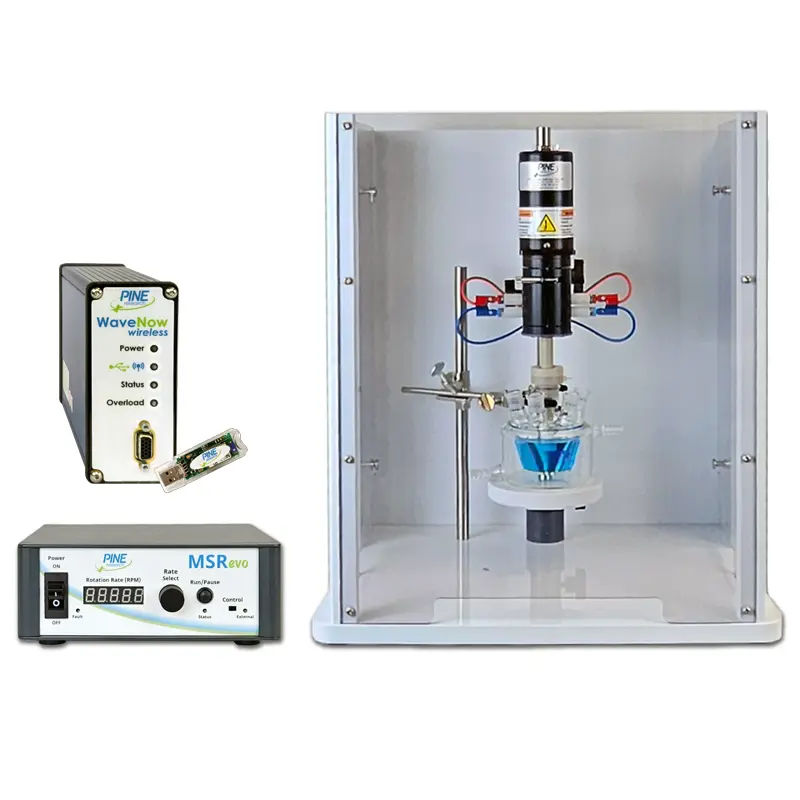
Basic System Bundle
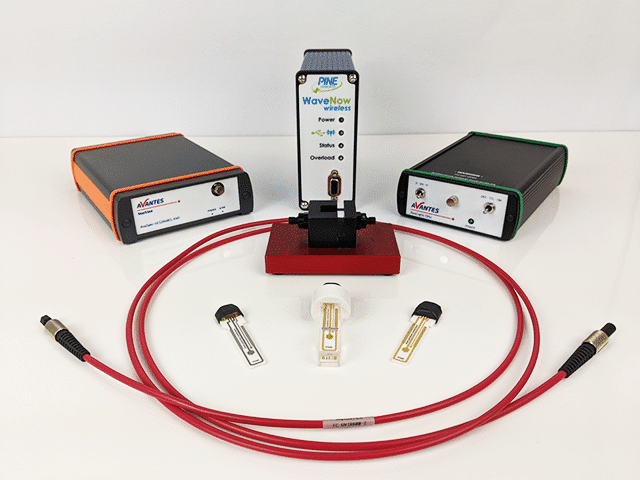
Honeycomb Cell and UV/Vis
WaveVortex 10 and RDE Electrode
MSR evo and RDE Electrode
Electrochemical Workstations
Communication
General
Auxiliary Connections
Accessories
Rotator Control Connections
Electrochemical Impedance Spectroscopy (EIS)
Data Acquisition (for DC Experiments)
Applied Potential (Potentiostatic Mode)
Measured Potential
Electrometer (Reference Electrode Amplifier)
Power Amplifier (Counter Electrode Amplifier)
Applied Current (Galvanostatic Mode)
Measured Current (Potentiostatic Mode)
Ground Connections
Electrode Connections
Cables
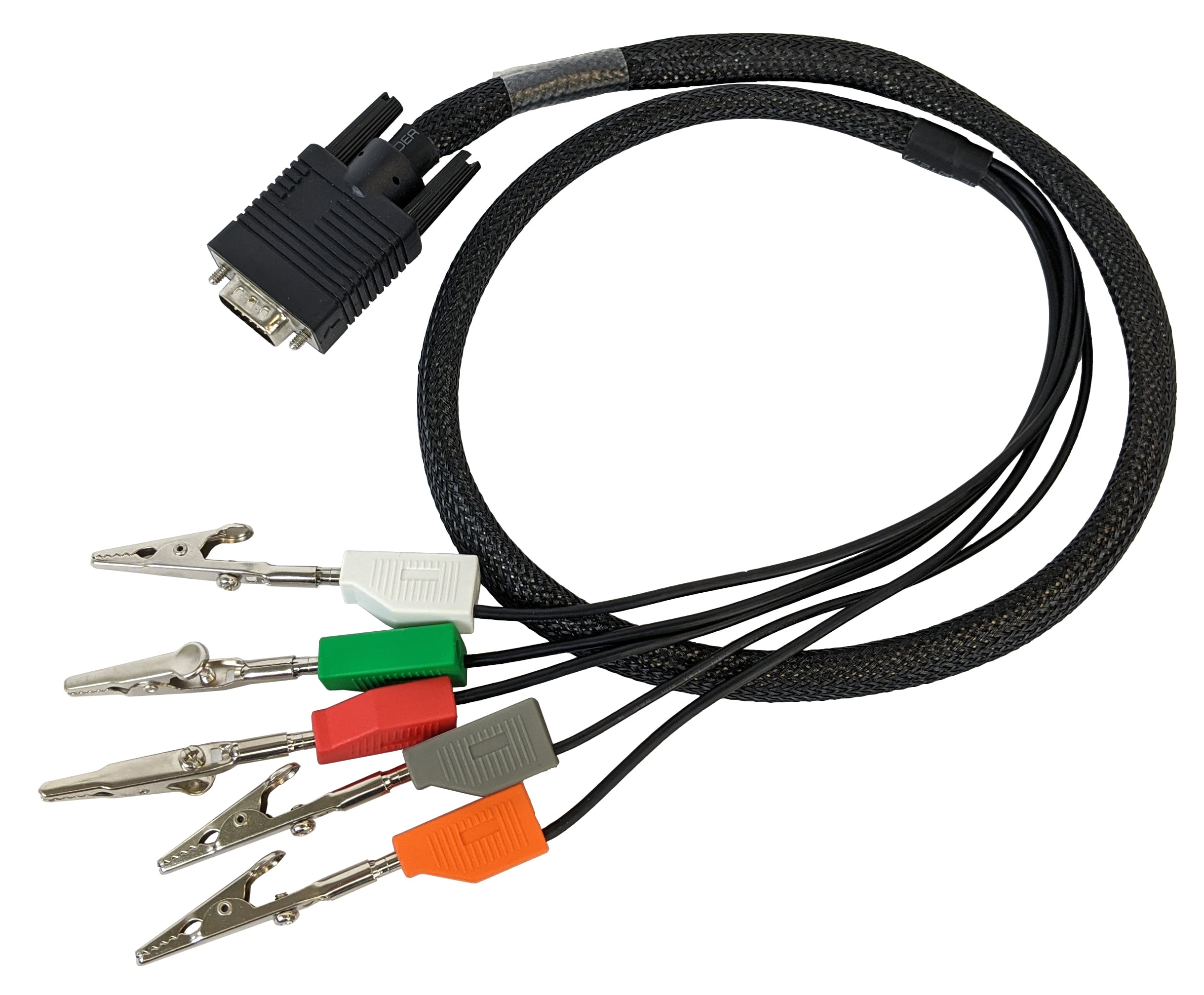
Workstation Cell Cable
Workstation Compatibility
Electrochemical Workstations
General
- Oyama, R.; Kawaguchi, K.; Moshniaha, L.; Narayana, Y.S.L.V.; Madea, D.; Mitrofanov, K.; Suchiang, H.; Jose, A.; Kabe, R. Investigating charge accumulation mechanisms in organic materials via slow transient emission spectroscopy. Science Advances 2025, 11, eadx9806.
- Bierling, H.M.; Dorsa, A.R.; LaCoursiere, J.; Yap, G.P.A.; Olsen, M.; Dudley, T.J.; Kassel, W.S.; Paul, J.J.; Young, E.R. Toward Understanding Ligand-Directed Excited-State Electron Flow in Bridged Ruthenium(II) Complexes. Inorg. Chem. 2025, acs.inorgchem.5c03283.
- Shen, D.; Sun, F.; Liang, Z.; Mei, B.; Xie, Y.; Wang, Y.; Wang, L.; Fu, H. Oxygen spillover on supported Pt-cluster for anti-CO-poisoning hydrogen oxidation. Nat. Commun. 2025, 16, 3883.
- Tiwari, L.; Heiden, Z.M.; Waynant, K.V. Exploring the electronic influence on coordination complexes formed from appended pyrrolidine azothioformamide ligands and copper(I) salts. J. Mol. Struct. 2025, 1320, 139740.
- Dempsey, J.L.; Jackson, M.N.; Peroff, A.G. Meeting the Need: Formal Electrochemistry Training through Workshops. J. Chem. Educ. 2024, 101, 483-489.
- O’Donnell, S.; Kremer, R.K.; Maggard, P.A. Metastability and Photoelectrochemical Properties of Cu2SnO3 and Cu2–xLixTiO3: Two Cu(I)-Based Oxides with Delafossite Structures. Chem. Mater. 2023, 35, 1404-1416.